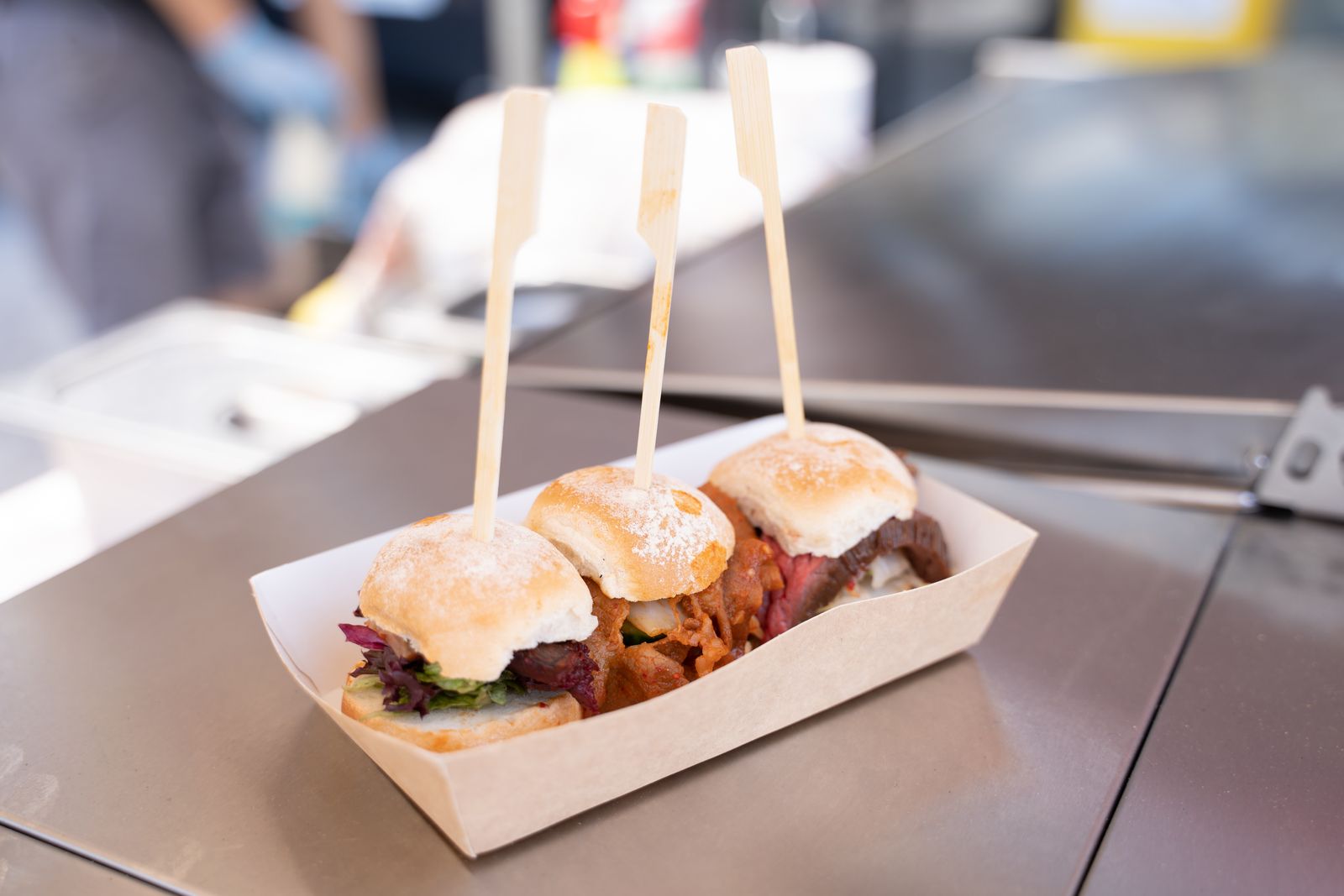
Festival season is winding down, and if you've read the last two winter-income pieces here, you'll know the pattern: the calendar doesn't stop needing you, it just moves indoors and onto different bookings. Weddings are one of the biggest of those, and they've quietly stopped being a novelty booking.
Street food at weddings used to mean one truck doing evening food after the sit-down meal was cleared away. Increasingly it's the whole reception — two or three trucks side by side, each doing one cuisine, guests wandering between them instead of being served a set menu. It's cheaper for the couple than a formal caterer, it photographs well, and it gives guests something to do besides sit at a table, which is exactly why planners keep recommending it.
What it actually pays
UK pricing for wedding street food catering typically runs £14-17 a head, with most trucks setting a minimum spend of £500-1,500 depending on guest numbers and the season. That's usually higher margin than a festival pitch, because there's no gate ticket competing for the guest's spare cash — the couple has already paid for the food, so every guest eats.
The planning timeline is longer than you'd think
Couples book popular trucks 9-12 months ahead for a summer Saturday, which is a very different sales cycle to a festival application. It rewards a trader who's easy to find and quick to quote — a clear per-head price range on a website or listing beats a slow reply to a pricing enquiry every time, because a couple comparing three trucks on a Tuesday evening won't wait a week for an answer.
The problem nobody talks about: three trucks, one till
Here's the bit that's specific to weddings and doesn't come up at a solo festival pitch. When two or three trucks share one reception, each running separately, you get three queues, three sets of orders, and no shared picture of who's eaten and who hasn't — which matters more at a wedding than anywhere else, because there's no second sitting and a hungry guest is a guest complaining to the couple, not just to you.
A shared QR ordering setup solves this the same way it solves a festival rush: guests order from their phones instead of queuing at whichever truck looks shortest, and each truck's kitchen screen only shows its own tickets, so nobody's cooking someone else's order by mistake. It's a small thing to set up before the day and it's the difference between three trucks working as one reception and three trucks quietly competing for the same 80 guests.
Getting found
Most wedding bookings now start with a search, not a recommendation — couples look at street-food-specific listings and wedding directories, compare per-head pricing, and shortlist two or three to message. A clear, current listing with real photos and an honest price range does more for winter and spring bookings than waiting to be asked.
It's another calendar running alongside the festival one, not instead of it — and unlike a festival pitch, a wedding doesn't care what the weather's doing to footfall. The couple's already paid.